The Ultimate Guide to Electrical Panel Upgrades: Why Your 1970s Home Can't Handle Your 2026 Lifestyle
The "Heart" of Your Home: How It Works
Your electrical panel (breaker box) is the heart of your home's electrical system. It receives the main power feed from the utility company (Evergy) and distributes it into individual circuits (the veins) that power your outlets and lights.
Crucially, it is also your safety device.
- The Breaker: A circuit breaker is designed to "trip" (cut power) if too much electricity flows through a wire. Without this fail-safe, the wire would overheat, the insulation would melt, and the studs inside your walls would catch fire.
The Problem: If your panel is old, it might not just be small; it might be failing to trip when it should. Or, it might be so overloaded that you are constantly losing power.
Signs You Need a "Heavy Up" (Upgrade)
How do you know if your panel is past its prime? You don't need to be an electrician to spot the red flags.
A. The "Panel Tripping" Dance
If you have to turn off the microwave to run the hair dryer, or if the vacuum cleaner trips the living room lights every time you turn it on, your panel is maxed out. You are demanding more amperage than the system can provide.
B. Flickering Lights
Do your lights dim momentarily when the AC compressor kicks on or when the refrigerator motor hums? This "voltage drop" indicates that your main service entry cable or the bus bar in your panel is struggling to handle the in-rush of current.
C. Physical Warmth or Noise
Go to your basement or garage and put your hand on the metal door of your panel. It should be cool. If it is warm to the touch, or if you hear a faint buzzing/sizzling sound, call us immediately. This indicates loose connections and arcing electricity, which is a direct fire hazard.
D. The "Rust" Factor
In many older Kansas City homes, the service cable on the exterior of the house has cracked insulation. Water trickles down the cable, enters the meter can, and drips right onto the breakers inside your panel. If you see rust stains at the bottom of your breaker box, your panel is compromised.
The Big Danger: Hazardous Panel Brands
Not all old panels are just "small"; some are inherently dangerous. If your home was built between 1950 and 1980, check the label on your panel door. If you see these names, you need a replacement immediately:
- Federal Pacific Electric (FPE) Stab-Lok: These are infamous. Testing has shown that up to 1 in 4 of these breakers fail to trip during an overload. They are essentially "no-trip" switches. Insurance companies often refuse to insure homes with FPE panels because they are a known fire risk.
- Zinsco / GTE-Sylvania: These panels have a design flaw where the breakers melt to the main bus bar. This means even if you try to turn the breaker off, it might still conduct electricity.
If you have one of these brands in your Overland Park or Lee's Summit home, replacing it isn't an "upgrade"—it's a safety necessity.
100 Amp vs. 200 Amp: What Do You Need?
This is the most common question we get: "Do I really need 200 amps?"
The 100-Amp Standard (The Old Way)
Most homes built before 1990 have 100-amp service. This is "technically" enough for a modest home with gas appliances (gas furnace, gas range, gas water heater). However, it leaves zero room for expansion.
The 200-Amp Standard (The Modern Way)
This is the current code standard for new construction. Why do you need double the power?
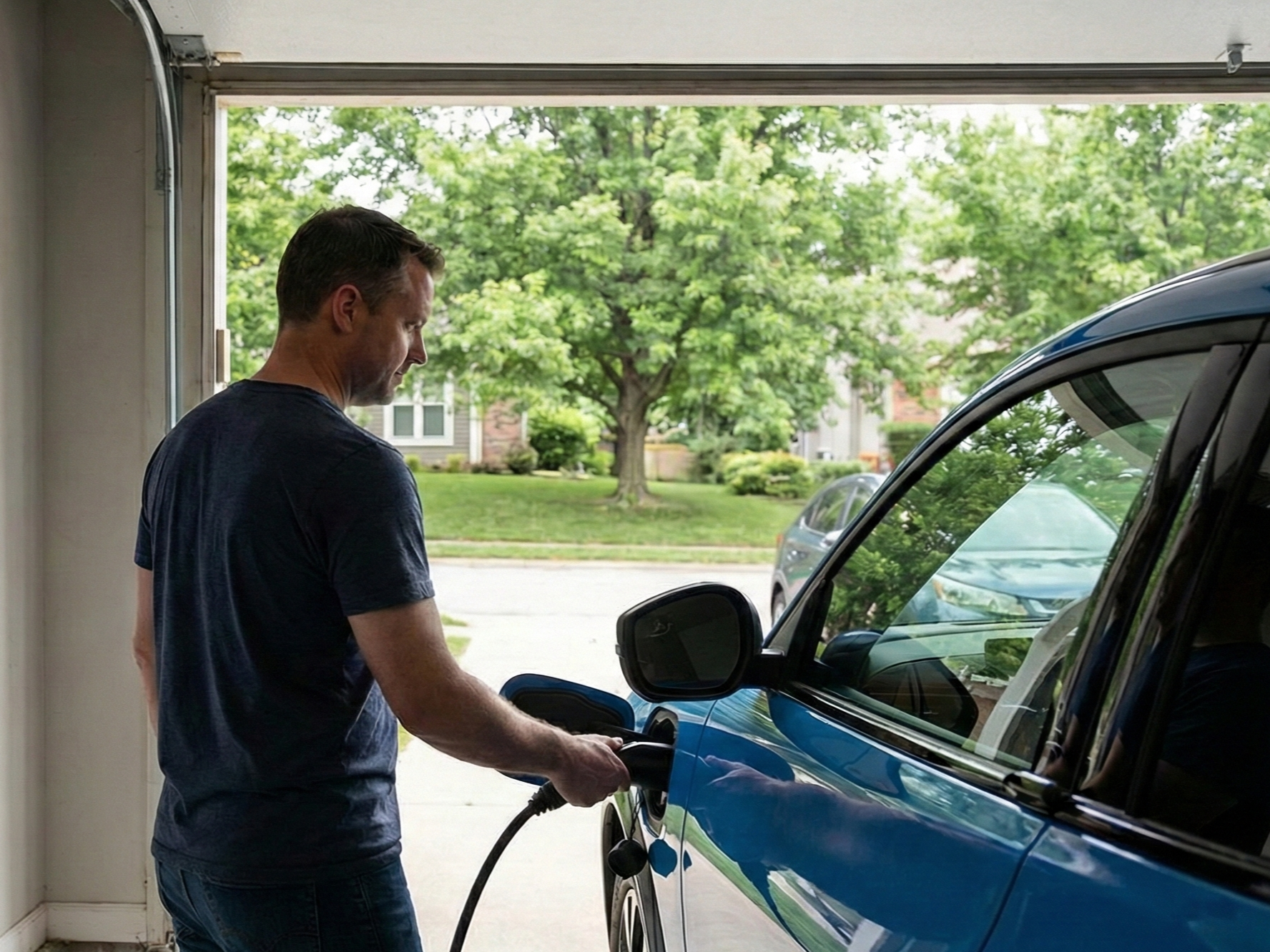
- Electric Vehicles (EVs): A Level 2 EV charger typically requires a dedicated 50-amp circuit. That one appliance takes up half the capacity of an old 100-amp panel. You literally cannot install a fast charger on a 100-amp service without risking a main breaker trip.
- Electrification: As homeowners switch from gas to electric (induction cooktops, heat pumps, electric tankless water heaters), the electrical load skyrockets.
- Resale Value: A 100-amp panel is now considered a "defect" by many home inspectors and buyers. Upgrading to 200 amps future-proofs the home.
The Pure Light Process: How a Heavy-Up Works
Upgrading your service is a major job involving coordination with the city and the power company. Here is what it looks like when you hire Pure Light Electric.
Step 1: The Permit & Coordination We handle all the paperwork. We pull the electrical permit from your city (whether that's KC, Overland Park, Lenexa, etc.) and we schedule the "disconnect" with Evergy.
Step 2: The Main Disconnect On the morning of the job, the power company cuts power to your home. For about 6 to 8 hours, your house will be dark. (We recommend stocking a cooler or planning a day out!)
Step 3: The Exterior Work We don't just change the box inside. We usually have to replace the:
- Service Entrance Cable: The heavy wire running up the side of your house to the roof.
- The Meter Can: The box that holds the glass meter.
- The Grounding System: We drive two new 8-foot copper ground rods into the earth outside your home. This is a critical code requirement that protects your electronics from lightning and surges.
Step 4: The Interior Swap We remove the old, messy panel. We label every wire. We install a new, premium panel (like Square D or Eaton) with plenty of room for extra breakers. We neatly route and terminate all your existing circuits into the new breakers.
Step 5: Inspection & Reconnection Once we are done, the City Inspector arrives to verify our work meets the National Electrical Code (NEC). Once passed, Evergy reconnects the power line, and your lights come back on—brighter and safer than before.
The "Whole Home" Surge Protection Bonus
While we are installing your new panel, we highly recommend adding a Whole Home Surge Protection Device (SPD).
In the 2020 National Electrical Code, this is actually mandatory for new services in many jurisdictions.
- Why? Modern appliances (washers, dryers, fridges) have computer boards inside them. A single lightning strike nearby, or even a grid fluctuation from Evergy, can fry those boards instantly.
- The Solution: The SPD sits inside your new panel and acts as a gatekeeper, diverting voltage spikes into the ground before they can touch your wiring. It is cheap insurance for your $3,000 refrigerator.
Conclusion: Powering Your Future
Your electrical panel isn't something you look at every day, but it is the backbone of your daily life. If you are planning a kitchen remodel, buying an EV, or just losing sleep knowing you have a 50-year-old panel in the basement, it is time for a Heavy Up.
At Pure Light Electric, we specialize in these complex change-outs. We pride ourselves on clean wiring (our panels look like art inside!) and strict adherence to safety codes.
Is your home ready for 2026? Contact us today for a panel inspection. We will give you an honest assessment of your current capacity and a clear quote for an upgrade.